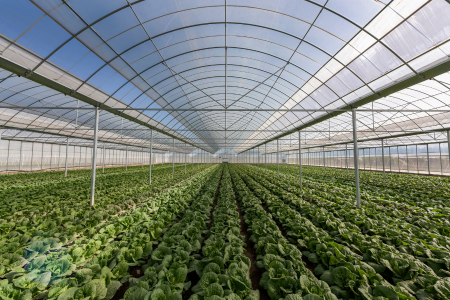
Across the Gulf Cooperation Council (GCC) from the hightech agricultural hubs of the United Arab Emirates and Saudi Arabia to Qatar, Kuwait and Oman, a quiet agricultural revolution is underway. Faced with hyper-arid desert climates, rapidly depleting groundwater reserves and a historical reliance on importing up to 90% of their food supply, GCC nations are making massive investments in Controlled Environment Agriculture (CEA), high density glasshouses and vertical farms.
Backed by national frameworks like the UAE Food Security Strategy 2051 and Saudi Vision 2030, the region’s agri tech market is expanding toward a projected $3.8 billion valuation. The objective of this sovereign backed expansion is clear, localise fresh produce production using minimal water and land.
However, desert soil is completely uncultivable for high intensity commercial farming. To achieve high yields, regional mega farms have turned to aggregate hydroponic systems. At the heart of this multi billion dollar transition is coco peat (coir substrate) the natural engine powering the Gulf’s indoor farming boom.
1. Slashing water consumption in Arid Environments
Water scarcity is the single greatest bottleneck for agriculture in the Middle East. Traditional open field flood or overhead irrigation leads to rapid evaporation under severe summer heatwaves, wasting vital desalinated or groundwater resources.
The 30% moisture cushion
Hydroponic systems already cut overall water consumption by up to 90% compared to open field soil farming. Integrating high grade coco peat into these systems maximises these savings even further.
- High Water Holding Capacity (WHC) – Premium coco coir retains up to ten times its dry weight in water, creating an immediate, accessible moisture reservoir at the root tip.
- Reduced Irrigation Cycles – Because coco peat holds water tightly within its cellular matrix while maintaining excellent drainage, commercial systems require fewer daily irrigation pulses, directly saving energy and water pumping costs.
2. Protecting crops against extreme desert heatwaves
In climate controlled glasshouses across the Gulf, outdoor summer temperatures routinely surpass 45°C. If an automated drip pump fails or a power surge occurs during peak hours, crop root zones in synthetic media like rockwool can dry out within minutes, leading to immediate plant death.
Rewetting and thermal insulation
Hydrophilic resiliency – Unlike traditional peat moss which becomes hydrophobic (water repellent) when dry coco peat rewets instantly upon contact with water. If an irrigation delay occurs, the substrate absorbs fresh nutrient solutions immediately without channeling out of the drainage holes.
Thermal root protection – Coir acts as a natural insulator, keeping root-zone temperatures cooler than the ambient glasshouse air during extreme heat spikes.
3. High aeration for maximum root health
High density indoor farms in the GCC produce high value crops, including tomatoes, cucumbers, bell peppers, strawberries, leafy greens and microgreens. These plants demand constant oxygen at the root level to absorb nutrients effectively.
Engineered coco peat mixes provide an optimal Air-Filled Porosity (AFP) of 20% to 25%. Even when fully saturated, the durable organic coir fibres preserve micro air pockets. This prevents root suffocation and root rot (Pythium), ensuring rapid plant growth cycles and year round harvesting.
4. Uncompromised quality control: Low EC and Natural Sterility
In arid climate cultivation, salinity buildup is a constant risk. Raw or unbuffered coir contains natural sodium and potassium ions that can cause immediate nutrient lockout in sensitive crops.
This is where the technical engineering of CoirRoots substrates becomes vital for commercial operations across the GCC.
- Triple washed and buffered – CoirRoots subjects its coir to rigorous washing and calcium buffering protocols, delivering a substrate with an ultra low Electrical Conductivity ($EC < 0.5 \text{ mS/cm}$) and a stable, native pH ($5.7 \text{ to } 6.5$).
- Naturally pathogen free – CoirRoots grow bags and open top planters are 100% organic, sterile and free from soil borne pathogens, weed seeds and nematodes, eliminating the need for restricted chemical soil fumigants.
Fueling the next era of GCC food security
As sovereign wealth funds and private investors accelerate the GCC’s $3.8 billion agri-tech expansion, the demand for standardized, high performance and sustainable substrates is at an all time high.
By importing compressed, 1:8 ratio coir blocks and custom grow bags directly from Sri Lanka, GCC agricultural developers and wholesalers secure a lightweight, cost-effective and highly reliable foundation for their high tech facilities.
Across the Middle East and GCC region, commercial growers and agricultural importers frequently refer to coco peat as coir pith or coir fibre pith. In local market channels, nursery networks and greenhouse supply chains, it is widely searched and traded under term like coconut peat moss, coconut soil, coir pith substrate, coir dust and organic coconut peat.
Partner with CoirRoots for commercial GCC agri tech projects
CoirRoots specializes in manufacturing and exporting custom blended grow bags, open-top planter bags and compressed 5kg blocks tailored for high tech indoor farms and commercial glasshouses worldwide. Contact our B2B export team for technical specifications and container load logistics.
CoirRoots I Call or WhatsApp: +94 77 744 2112 I Email: [email protected] I Web: www.coirroots.com