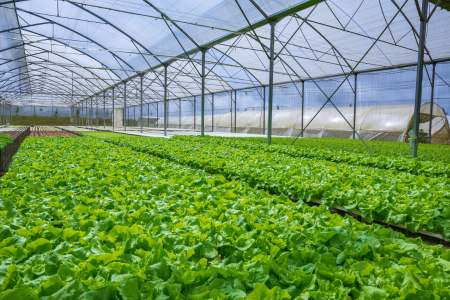
Across the global horticulture industry, one of the most significant operational shifts in decades is underway, the decisive move away from harvested peat moss toward peat free growing media. Driven by environmental regulations, retail supply chain mandates and the need for more resilient root zone performance, commercial nurseries, greenhouse operators and substrate blenders worldwide are rethinking how they grow.
However, transitioning away from peat is not merely an environmental compliance exercise, it is an agronomic decision that directly impacts water management, nutrient uptake and crop profitability. Understanding why peat is being phased out and why triple washed, buffered Sri Lankan coconut coir stands as its most reliable commercial replacement gives growers a clear competitive advantage.
Why the Horticulture Industry Is Moving Away from Peat Moss
For decades, sphagnum peat moss served as the default substrate for commercial plant production. Yet its long term viability has come under intense scrutiny across major agricultural markets in the United Kingdom, the European Union, North America and Asia-Pacific.
Environmental degradation and carbon release – peatlands are among the planet’s most vital carbon sinks, storing more carbon per hectare than tropical rainforests. Extracting peat drains fragile wetland ecosystems, destroys biodiversity and releases centuries of locked carbon back into the atmosphere.
How the European market is changing: Policy shifts, covenants and extraction limits across Europe, a patchwork of national restrictions, industry covenants and retail mandates is steadily reshaping substrate sourcing. In the United Kingdom, DEFRA has signalled clear intentions to ban sphagnum peat even where formal legislation remains pending while major retailers and institutions such as the Royal Horticultural Society (RHS) enforce strict peat free standards.
Ireland has enforced restrictions on sphagnum peat extraction since 2022 despite having no formal ban on its end use, while Germany has placed targeted restrictions on sphagnum peat extraction across key areas.
Meanwhile, the Netherlands has established a formal industry covenant to reduce environmental impact and expand renewable growing media, Norway is pursuing national ambitions aimed at sphagnum peat reduction and Switzerland having halted sphagnum peat extraction entirely is actively driving toward a fully peat free consumer market. Together, these measures signal an irreversible European transition toward renewable alternatives.
Supply chain vulnerability and rising costs as extraction permits shrink and environmental levies increase, peat moss has become subject to tighter supply quotas, seasonal harvesting bottlenecks and rising landed costs. Forward thinking growers are diversifying their substrate inputs now rather than waiting for sudden supply disruptions.
How Coir Outperforms Peat in Commercial Production – the Agronomic Reality
Many growers initially hesitate to transition away from peat due to concerns about altering established irrigation and fertilisation routines. In practice, high grade coconut coir resolves several inherent physical limitations of peat moss.
- Superior rewetting and moisture distribution – when peat moss dries out between irrigation cycles, it becomes hydrophobic repelling water and causing uneven dry pockets inside pots or grow bags. Coconut coir remains naturally hydrophilic, absorbing and distributing water evenly throughout the root zone even after drying down.
- Long term structural stability – peat decomposes and compacts over extended multi harvest crop cycles, gradually suffocating roots as pore space collapses. High lignin Sri Lankan coir resists microbial breakdown, maintaining consistent Air-Filled Porosity (AFP) and drainage over 10- to 12-month greenhouse cycles.
- Optimal pH range without heavy liming – raw peat moss is naturally highly acidic ($\text{pH } 3.5\text{–}4.5$), requiring substantial additions of dolomitic lime to raise the pH to acceptable plant growing levels. Properly processed Sri Lankan coir naturally sits within an ideal horticultural range ($\text{pH } 5.5\text{–}6.5$), allowing immediate nutrient availability.
- 100% renewable and circular – unlike mined peat, which takes millennia to regenerate, coconut coir is a renewable agricultural by-product harvested from mature coconut husks transforming an abundant natural resource into a clean, circular horticultural input.
What Makes Coir Truly “Commercial Grade”?
Not all peat free alternatives or even all coir products deliver the same results. Wood fibre and composted bark often suffer from severe nitrogen drawdown (locking up nutrients meant for the crop), while poorly processed coir can introduce excess salts into the root zone.
To ensure a seamless, risk free transition to peat free production, commercial growers must source substrate engineered to strict laboratory standards.
- Multi stage triple washing ($\text{EC} < 0.5 \text{ mS/cm}$) – raw coconut husks naturally contain sodium and potassium salts. CoirRoots subjects its raw material to rigorous freshwater washing cycles to bring background Electrical Conductivity (EC) below $0.5 \text{ mS/cm}$, protecting salt sensitive crops from osmotic shock and root burn.
- Full Calcium buffering – coconut coir possesses a high Cation Exchange Capacity (CEC), meaning unbuffered coir can bind calcium and magnesium from your fertigation solution while releasing unwanted potassium and sodium. CoirRoots pre buffers its substrates with calcium nitrate, saturating exchange sites so your crops receive balanced nutrition from day one.
- Precision fractionation and custom blends – whether a grower is blending peat free potting mixes on an automated nursery line or running high density hydroponic gutters, physical structure matters. By combining calibrated fractions of fine pith, coarse coco chips and resilient fibres, coir can be tailored to replicate or exceed the exact water holding and aeration profile of any traditional peat based recipe.
The CoirRoots Peat Free Substrate Range
As a dedicated Sri Lankan manufacturer, CoirRoots supplies commercial growers, substrate blenders, and agricultural distributors worldwide with certified, peat free growing media backed by single origin traceability.
- 5kg compressed coir blocks and 25kg loose bales – low-EC, triple washed and calcium buffered pith and chip grades ideal for commercial potting soil manufacturers transitioning to peat-free formulations.
- UV-Stabilised hydroponic grow bags – custom chip-to-pith slabs engineered for glasshouse tomatoes, cucumbers, peppers and strawberries.
- Open top planter bags and propagation discs – ready to hydrate containers and sterile seedling plugs designed for soft fruit nurseries, ornamental growers and automated plant factories.
- Custom Formulations and co-packing (Private Labelling) – tailored physical blends, bespoke bag dimensions and full OEM private labelling services to support regional brands and commercial distribution partners.
Partner with CoirRoots for your Peat Free transition
Moving to peat free growing media is no longer a future consideration, it is the new global benchmark for sustainable, high yield horticulture. By partnering directly with a primary Sri Lankan manufacturer like CoirRoots, growers and distributors eliminate middleman markups, secure consistent batch-to-batch quality and gain a reliable supply of clean, renewable substrates built for modern agriculture.
To discuss custom peat free substrate specifications, request laboratory technical data sheets or arrange container load supply agreements, connect with the CoirRoots team directly.